


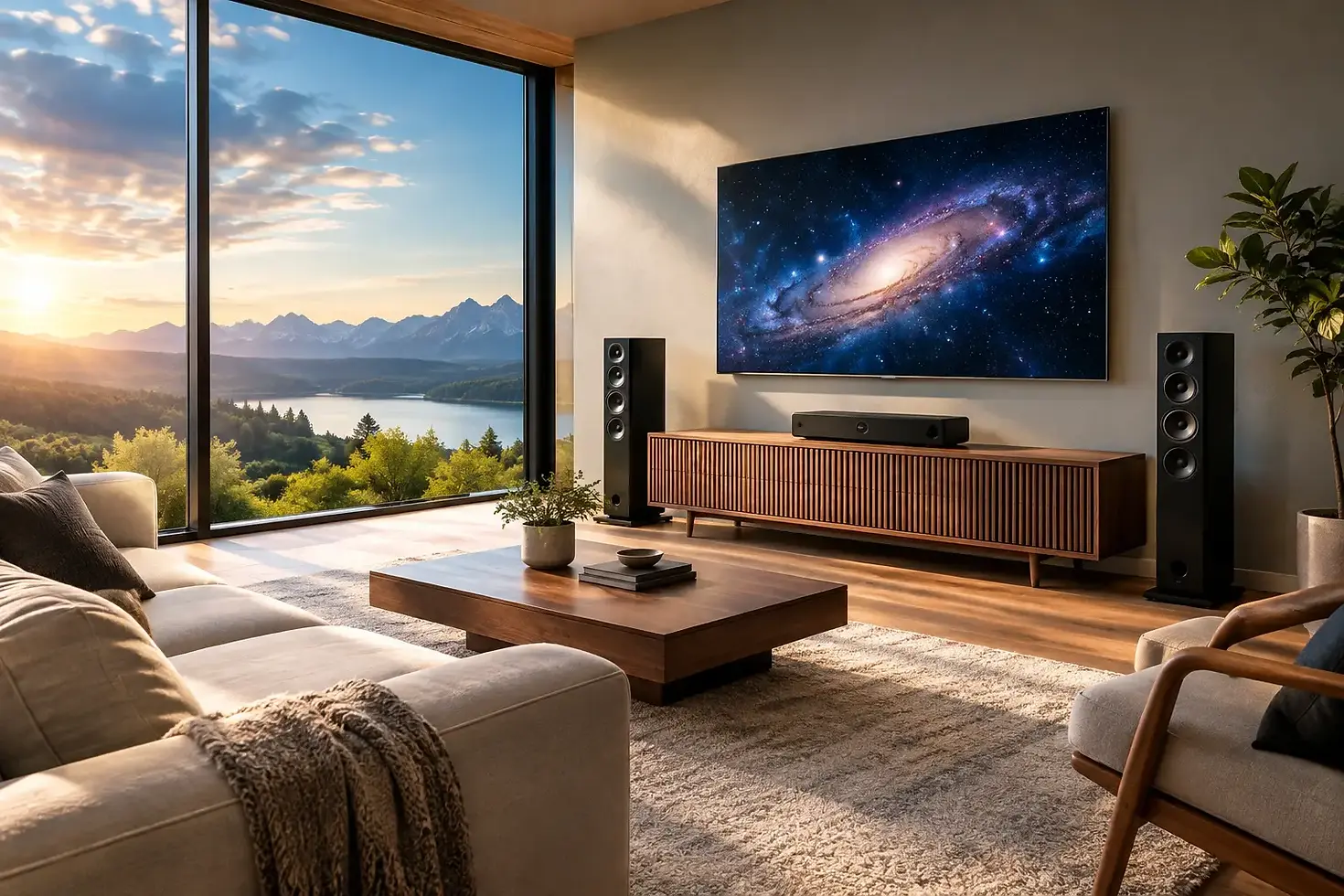
A Guide to Home Speaker Placement That Feels Right
A room can either reveal the quiet detail in a recording or quietly work against it. The same piece of music may feel spacious and intimate in one position, then blurred, narrow, or overly heavy a few feet away. This guide to home speaker placement is not about chasing a perfect laboratory setup. It is about giving music enough physical space to breathe, so its atmosphere can arrive with the emotional shape the artist intended.
Begin With the Listening Position
Before moving the speakers, choose where you will listen. This is the center of the experience, whether it is a dedicated chair in a listening room, the center of a sofa, or a desk where music accompanies writing and focused work.
For a conventional stereo setup, the listener and the two speakers should form an approximate equilateral triangle. If the speakers are six feet apart, sit roughly six feet from each speaker. This is a starting point rather than a rule carved in stone. A smaller room may call for a tighter triangle, while a larger space can allow more distance.
Avoid placing the listening seat directly against a wall if possible. A rear wall can reinforce bass frequencies and make low notes feel larger than they truly are. Moving the seat forward even one or two feet often brings greater definition to kick drums, cellos, bass lines, and the lower register of a piano.
Symmetry matters more than many listeners expect. Try to give each speaker a similar relationship to nearby side walls, furniture, and openings. One speaker pressed into a corner while the other opens into a hallway will create an uneven image. The music may still be enjoyable, but voices, reverberant instruments, and cinematic textures can seem pulled toward one side.
Give Speakers Room to Speak
The most common placement mistake is treating speakers like decorative objects. Shelves, corners, and walls may be convenient, but they change the sound dramatically. Speakers create energy in the room, especially at lower frequencies, and nearby surfaces reflect that energy back toward the listener.
Start by pulling speakers away from the wall behind them. A practical first position is around 18 to 36 inches from the front wall, measured from the rear of the speaker cabinet. Some designs are made to work closer to a wall, particularly compact speakers or models with front-facing ports. Others need more open space. The manufacturer’s guidance is useful, but your ears should make the final decision.
As the speakers move farther from the front wall, the soundstage often becomes more layered. You may notice that a distant pad, a soft piano decay, or the ambient trail behind a guitar has a clearer location in space. Move them too far into a small room, though, and the presentation can lose weight or leave the room feeling impractical. Placement is always a negotiation between acoustics and daily life.
Keep speakers away from corners when you can. A corner amplifies bass and can make music feel exciting for a moment, then tiring over a longer listening session. In ambient, orchestral, and soundtrack-oriented work, excessive bass often masks the details that create depth: breath, resonance, room tone, and silence between phrases.
Height and Toe-In Shape the Image
For most bookshelf and floor-standing speakers, the tweeters should sit near ear height when you are seated. This matters because higher frequencies are directional. If the tweeters are well below or above your ears, cymbals, strings, and delicate electronic textures may lose focus.
Bookshelf speakers usually benefit from proper stands rather than being placed directly on a desk, cabinet, or crowded shelf. A stable stand reduces unwanted vibration and makes it easier to set the right height. If a shelf is the only realistic option, pull the speakers as far forward as possible so the front of each cabinet is close to the shelf edge. This reduces reflections from the shelf surface.
Next, experiment with toe-in, the slight inward angle of each speaker toward the listening position. Begin with both speakers aimed just behind your head. This often creates a broad, coherent image without making the center feel overly sharp.
More toe-in can increase precision and bring a central vocal, solo instrument, or lead melody into clearer focus. Less toe-in can make the stage feel wider and more relaxed, though it may soften the center image. Neither is automatically better. Music built around intimate detail may benefit from a more focused arrangement, while wide atmospheric recordings can feel more natural with a gentler angle.
A Guide to Home Speaker Placement in Real Rooms
Few homes are empty rectangles, and that is not a failure. Rugs, curtains, bookshelves, sofas, and artwork are part of how a living space becomes personal. The goal is not to turn every room into a studio. It is to notice which surfaces are helping and which are adding distraction.
Hard, bare rooms tend to produce bright reflections. If handclaps sound sharp and lingering in the room, your speakers may sound more aggressive than they are. A rug between the speakers and listening position can soften one of the most influential reflection paths: the floor. Curtains, upholstered furniture, and full bookshelves can also reduce harshness without making a room feel acoustically dead.
Large glass surfaces, bare side walls, and coffee tables can create early reflections that blur stereo imaging. You do not need to eliminate every reflection. Some sense of room is natural and welcome. But if a piano seems to spread vaguely across the room instead of occupying a believable space, look first at the surfaces immediately beside and in front of the speakers.
For desktop listening, scale everything down. Place the speakers so they are roughly at arm’s length, form a small triangle with your head, and raise or tilt them until the tweeters aim toward your ears. Isolate them from the desk with pads or compact stands if possible. A desk surface can exaggerate lower midrange energy, making warm music sound congested.
Work With Bass, Not Against It
Bass is the part of placement most affected by the room. It gathers near walls, changes dramatically from one seat to another, and can disappear or swell based on distances that seem insignificant. Resist the urge to judge a setup using only one bass-heavy track. Instead, listen to several familiar pieces with sustained low notes, acoustic bass, percussion, and quiet passages.
If the bass is thick or boomy, first move the speakers farther from walls and corners. If that does not help enough, move the listening position forward. Small changes matter here. Try six inches at a time, then live with each position for a few songs rather than switching constantly.
A subwoofer adds another layer of possibility and complexity. It can extend the foundation of a system beautifully, especially for cinematic scores and electronic music, but only if it is integrated with care. Start at a modest volume. The subwoofer should make the lowest octave feel present, not announce itself as a separate source. If you can easily point to where the bass is coming from, its level, crossover setting, or position likely needs adjustment.
Listen in Passes, Not in a Rush
Speaker placement is easiest when you change one variable at a time. Begin with distance from the front wall. Then refine speaker spacing, toe-in, and listening position. After each adjustment, return to music you know deeply.
Choose recordings with different qualities: a solo piano piece for tone and decay, a sparse instrumental work for image placement, an orchestral cue for scale, and a track with controlled low end for balance. Listen for whether the center feels stable, whether quiet sounds remain audible, and whether the music invites you to stay with it rather than analyze it.
Do not confuse brightness with detail or more bass with greater emotional impact. A satisfying system has contrast. It can carry a low drone without obscuring a soft high note. It can present width without losing intimacy. It leaves room for the smallest gestures in a composition to matter.
A carefully placed pair of speakers does more than improve fidelity. It changes the pace of listening. Once the room stops competing with the music, you may find yourself returning to an album not for background sound, but for the particular place it creates around you.


Commenti